
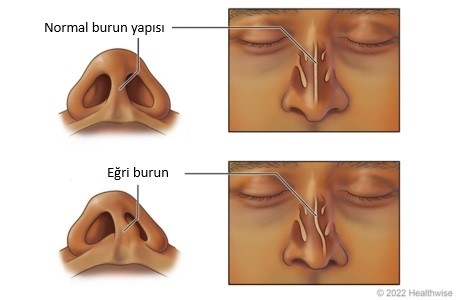
A deviation is when the bone and cartilage that separates your nasal cavity (nostrils) have shifted from the center. The nasal septum is the tissue that separates the right and left sides of your nasal cavity. A perfectly straight nasal septum forms two equally sized nasal cavities.
Air flows freely through both.
But about 8 out of 10 people, most of us, have a nasal septum that is slightly off-center. Many people are not aware of this because they have no complaints.
But if there is a more pronounced deviation, it may be difficult for air to flow through your nose. This can make it difficult for you to breathe. It can make you more likely to experience nosebleeds and other problems.
Symptoms of nasal septum curvature
A severely curved septum can make your nose look off-center.
Other symptoms of a deviated septum may include:
Difficulty breathing through your nostrils (usually worse on one side)
Facial pain
Headache
Loss of smell
Nasal congestion
Noisy breathing
Nosebleeds
Snoring
Causes of deviated septum
You can be born with a deviated nasal septum. A difficult birth can damage your nasal septum. As your nose grows, so does your septum, and sometimes it can tilt more to one side. This is the most common cause of a deviated septum. Other causes include the nose
There are injuries such as fractures.
-Risk factors
Activities or events that lead to a nose injury increase your risk. Examples include:
Car accidents, contact sports, falls, fights, inhaling addictive substances through your nose
You can't avoid all risks. However, you can take precautions such as wearing a seat belt. You can use protective equipment (such as a mid-face mask and helmet) when playing contact sports.
Complications of this ailment (undesirables)
A small nasal septum deviation may not cause any problems. However, a severely deviated septum can cause problems such as:
Chronic sinusitis
Dry mouth
Nasal congestion
Sleep apnea
Prolonged or frequent ear infections (in children)
Diagnosis and Tests
How do doctors diagnose this condition?
Your doctor will examine your nose using a nasal speculum.
This tool gently opens your nostrils, allowing your doctor to see inside your nose. He will look at your septum to see if it affects the size of your nasal passages. You can also take tests that show tissue deeper in your nose
You may need, such as:
Computed tomography scan
Nasal endoscopy
Management and Treatment
Most people do not need treatment for a deviated septum because they have few or no symptoms. You can treat mild symptoms with medication. But if a deviated septum is preventing you from breathing properly, you may need surgery.
Medications
Mild deviated septum may cause occasional symptoms. These symptoms may not appear until you become ill. You can treat these symptoms with over-the-counter medications. These include:
Antihistamines
Nasal steroid sprays
Nasal openers
However, do not use nasal decongestant sprays for more than three days in a row. This can result in recurrent congestion.
Deviated septum surgery
The only way to correct a deviated septum is septoplasty. If you have breathing problems or other bothersome symptoms (complaints), this surgery may be an option. During septoplasty, the surgeon reshapes your septum.
If your child needs surgery, the surgeon may postpone septoplasty until his nose is fully grown (until about 17-18 years of age).
Sometimes septoplasty is performed in conjunction with rhinoplasty. This surgery reshapes your nose. It can help if you are unhappy with the way your nose looks.
When should I see a doctor?
If your complaints prevent you from breathing, disrupt your sleep, or negatively affect other aspects of your life, talk to an otolaryngologist.
Dr. Tuğçe Pütürgeli Özer
Ear, Nose and Throat Diseases Specialist
European Board Certified ENT Surgeon